
AI Detectors: What's Actually Sourced
Pangram claims a tiny false-positive rate, and Epoch AI's independent test found misses on imitation. Here's what each source measured, and what it means for authors.

Pangram's Own Claim
0.0041% false positives (Pangram 4, its own test)
Epoch AI's Independent Test
Pangram missed 10.1% of style-imitation AI text (version 3.3.2)
Important
SCBWI's process-documentation rule is not a KDP rule

By Gundi Gabrielle
6 min read
Two claims about AI detectors keep getting repeated: "they don't work" and "the problem is solved."
Neither one matches the sources. Pangram, the detector most often quoted, publishes its own numbers. Epoch AI ran an independent test. And a children's-book organization, SCBWI, just tightened its award rules to ask for proof of human work, and says it won't use AI detectors to check it.
I'm keeping this to what each source actually measured, because the same number can mean very different things depending on the test.
What does Pangram claim about its AI detector?
Short answer: Pangram's own technical report says its latest model wrongly flags human writing in about 1 of every 24,000 documents.
According to Pangram's technical overview, published in July 2026, Pangram 4 has a false positive rate of 0.0041%, with a 95% confidence interval of 0.0032% to 0.0050%. Its false negative rate, meaning AI text it fails to catch, is 0.3396%. Pangram says the figure was measured on 2 million commercially licensed pre-2022 documents held out from training.
Two things to keep in mind. First, this is Pangram's own test of its own model, on its own data. Second, the report says plainly that its AI detector does better on longer text, and Pangram's overview lists math or coding help and multiple-choice answers as out of scope.
What did Epoch AI's independent test of AI detectors find?
Short answer: Epoch AI found Pangram and GPTZero flagged none of the human writing, but all three detectors it tested missed some AI text written to imitate a real author's style.
Epoch AI's test used 495 human passages from 99 authors, plus 297 AI passages written with a basic prompt and 297 written to imitate an author's style. Here is what it measured:
| What Epoch tested | Pangram's result | What it means |
|---|---|---|
| Human passages wrongly flagged as AI | 0 of 495 | No false positives in this test |
| Basic-prompt AI text missed | 0 of 297 (0%) | Plain AI text gets caught |
| Style-imitation AI text missed | 30 of 297 (10.1%) | About 1 in 10 slipped through |
| Style imitation of scientific writing missed | 25 of 99 (25%) | A harder genre for detectors |
The three detectors Epoch tested were Pangram, GPTZero, and Originality.ai. GPTZero also flagged none of the human passages, while Originality.ai flagged 19 of 495 (3.8%). On plain AI text, GPTZero missed 2 of 297 and Originality.ai 1 of 297. For style imitation, GPTZero missed 10.77% and Originality.ai 17.85%.
Epoch also states its limits: it tested one evasion method, showing the model five real passages and asking for a new piece in the same style. It did not test paraphrasing tools or manual editing. And it tested Pangram version 3.3.2, not the newer Pangram 4 behind the 0.0041% claim.
So are AI detectors "solved" or "useless"?
Short answer: Neither. The sourced evidence says AI detectors are very good at plain AI text and rarely accuse human writers, but they can be fooled by deliberate imitation.
Here is how the two sources fit together:
- Pangram's claim and Epoch's test measure different things. Pangram's number is about false accusations of human writing. Epoch's 10.1% is about missed AI text. They don't contradict each other.
- They tested different versions. Epoch used Pangram 3.3.2. The 0.0041% figure belongs to Pangram 4.
- A separate check points the same way. ALLi's Self-Publishing News podcast on October 2 reported a test of 50 self-published books that predate ChatGPT, and none came back flagged as AI. That's an episode summary, not a published paper, so I treat it as supporting evidence, not proof.
If you hear "AI detectors are solved," the style-imitation misses say otherwise. If you hear "AI detectors don't work," the false-positive results say otherwise.
👑 Want to use AI the right way for your book? Golden Bestseller Empire keeps you in the driver's seat. → Meet your AI Publishing Team
What is SCBWI's new rule, and does it apply to KDP?
Short answer: SCBWI's rule is about its own awards, not Amazon. It's a policy signal from one corner of publishing, and it is not a KDP rule.
SCBWI's generative AI policy says members must check a box confirming no generative AI was used in creating their text or images when they submit to its awards, grants, and similar programs. It adds that "finalists may be asked to provide evidence of the development of their submitted work, such as preliminary sketches, drafts, revision history, layered source files, or other process documentation," and that failing to provide reasonable process evidence may result in disqualification.
SCBWI is also explicit about the method: it says it will not use AI detectors to review this evidence, and relies on human review instead. That's far stricter than Amazon. SCBWI opposes text-prompted generative AI in creating children's books at all. KDP's rule is narrower, and it hasn't changed.
What does KDP actually require?
Short answer: KDP asks you to disclose AI-generated text, images, or translations. It does not ask you to disclose AI-assisted work.
Amazon's Content Guidelines define AI-generated content as content created by an AI tool, even if you edited it afterward. AI-assisted means you created the content and used AI to edit, refine, or brainstorm. I walk through the difference, with a table, in Can You Publish AI Books on Amazon KDP?.
Nothing in KDP's rules says Amazon runs AI detectors on your book. I couldn't find a source that says it does, so I won't claim it. Your responsibility is the honest answer to KDP's question when you publish.
What should authors do about AI detectors?
- Don't treat a detector score as proof of anything. A clean score doesn't prove human authorship, and a flag isn't a verdict.
- Keep your own process records. Drafts, notes, and revision history are what SCBWI-style rules ask for, and they're good practice anyway.
- Answer KDP's AI question honestly. The rule is about who created the content, not what a detector says.
- Check the source behind any number you see. Ask what was measured, on which version, and by whom.
- Keep your voice in the book. That's the best protection, and it's also the point of writing.
If you're also following the wider AI debate, I covered one recent example in the Frankfurt Appeal.
Still unknown (and worth watching)
- How Pangram 4 does on the style-imitation test. Epoch tested an earlier version.
- How well AI detectors handle text that is partly written by a person and partly by AI. The tests above don't settle it.
- Whether other award bodies and publishers copy SCBWI's process-evidence rule.
- Whether KDP ever adds a detection step. Nothing I found says it will.
I keep every change I can verify in one place: the latest Amazon KDP updates. And my Amazon KDP publishing guide shows where AI fits at each step of making a book.
A quick note from someone who's been doing this a while
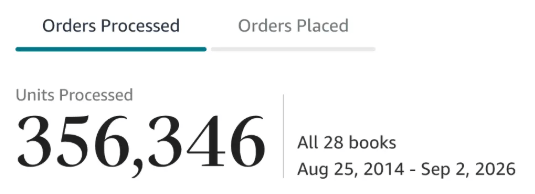
I've published for 10 years and sold over 350,000 books, and my own rule stays the same: AI is amazing, and I just don't like having it write my books. Used as an assistant for research, planning, and polishing, it saves time and keeps the writing yours.
If you only do one thing after reading this: start a simple folder for each book with your notes and drafts, so you can show your process whenever someone asks.
Frequently Asked Questions
What does Pangram claim about its AI detector's accuracy?
Pangram's July 2026 technical overview says Pangram 4 has a false positive rate of 0.0041% (about 1 in 24,000 human-written documents), with a 95% confidence interval of 0.0032% to 0.0050%. That is Pangram's own test on its own data.
What did Epoch AI's independent test find?
Epoch AI tested Pangram, GPTZero, and Originality.ai. Pangram flagged none of 495 human passages, but missed 30 of 297 AI passages written to imitate an author's style (10.1%), and 25 of 99 scientific-writing imitations (25%). Epoch tested Pangram version 3.3.2.
Are AI detectors accurate enough to trust?
The sourced evidence says they rarely flag human writing and catch plain AI text almost every time, but they can miss AI text written to imitate a specific author. They are neither solved nor useless.
Does KDP use AI detectors on my book?
No source I found says it does. KDP's rule is that you disclose AI-generated text, images, or translations when you publish. You do not have to disclose AI-assisted work.
Is SCBWI's AI rule a KDP rule?
No. SCBWI's generative AI policy applies to its own awards and programs. Finalists may be asked to provide process documentation such as drafts and revision history. SCBWI also says it will not use AI detectors to review that evidence. It is a policy signal, not an Amazon requirement.
Sources & Citations
- Pangram 4 Technical Overview (July 29, 2026)
- Epoch AI: AI detectors rarely flag human writing, but sometimes miss AI text imitating real authors
- SCBWI Generative AI Policy
- ALLi Self-Publishing News podcast (October 2, 2026)
- KDP Help: Content Guidelines (AI-generated vs. AI-assisted content)
- Living changelog: Amazon KDP & Related Marketplace Changes
This page is maintained independently and is not affiliated with Amazon. Always double-check the latest numbers inside your own KDP account before making pricing decisions.
Found this useful? Get more of this site in your Google.
One tap adds us as a preferred source — Google then shows you our posts more often in Search, Top Stories, and AI Overviews.

Created By

Top 100 Business Author · Carnegie Hall Conductor · Founder of Golden Bestseller Empire
Hey, I'm Gundi, and for over a decade, I've helped thousands of everyday people turn what they know into a bestselling book.
Along the way, I sold over 350,000 books, and was listed in Amazon's Top 100 Business Author Charts, ahead of authors like Simon Sinek, Brené Brown, Tim Ferriss, Robert Kiyosaki, or Brian Tracy.
No traditional publisher. No massive budget. Just understanding Amazon's algorithm and researching what readers actually want.
In my earlier years, I was a classical conductor & organist, touring the world, incl. Carnegie Hall & a performance for the Pope on St. Peter's Square.
These days, I love traveling as a Digital Nomad and orchestrating busy AI Agents 😎. Out of that came Golden Bestseller Empire — a complete AI-Powered Book Publishing Studio now helping authors around the world.
Can't wait to see you inside & help you publish your dream:
Featured In:





More from the Golden Bestseller Blog
AI Book Publishing
AI in Book Publishing: What Authors Need to Know Before They Publish
AI in book publishing is legal, allowed on Amazon KDP, and works best when AI assists and you write. Here is what the rules say and how Amazon's new algorithm fits in.
AI Book Publishing
Can You Publish AI Books on Amazon KDP? What You Must Disclose
Yes, you can publish AI books on Amazon KDP if you follow the rules. Here's the difference between AI-generated and AI-assisted work, and exactly what to disclose.
AI Book Publishing
The Frankfurt Appeal: What Publishers Want on AI Training, and What It Means for Indie Authors
German publishers opened the Frankfurt Book Fair with an appeal on AI training data. Here's what they're asking for and what it means for indie authors.
Want a faster way to plan and price your next book?
Golden Bestseller Empire's AI publishing tools help with exactly this kind of decision.