
What Is Amazon KDP? Kindle Direct Publishing Explained for Authors
What is Amazon KDP? Kindle Direct Publishing explained in plain English: what you can publish, how authors get paid, KDP Select, ISBNs, and the AI rules.
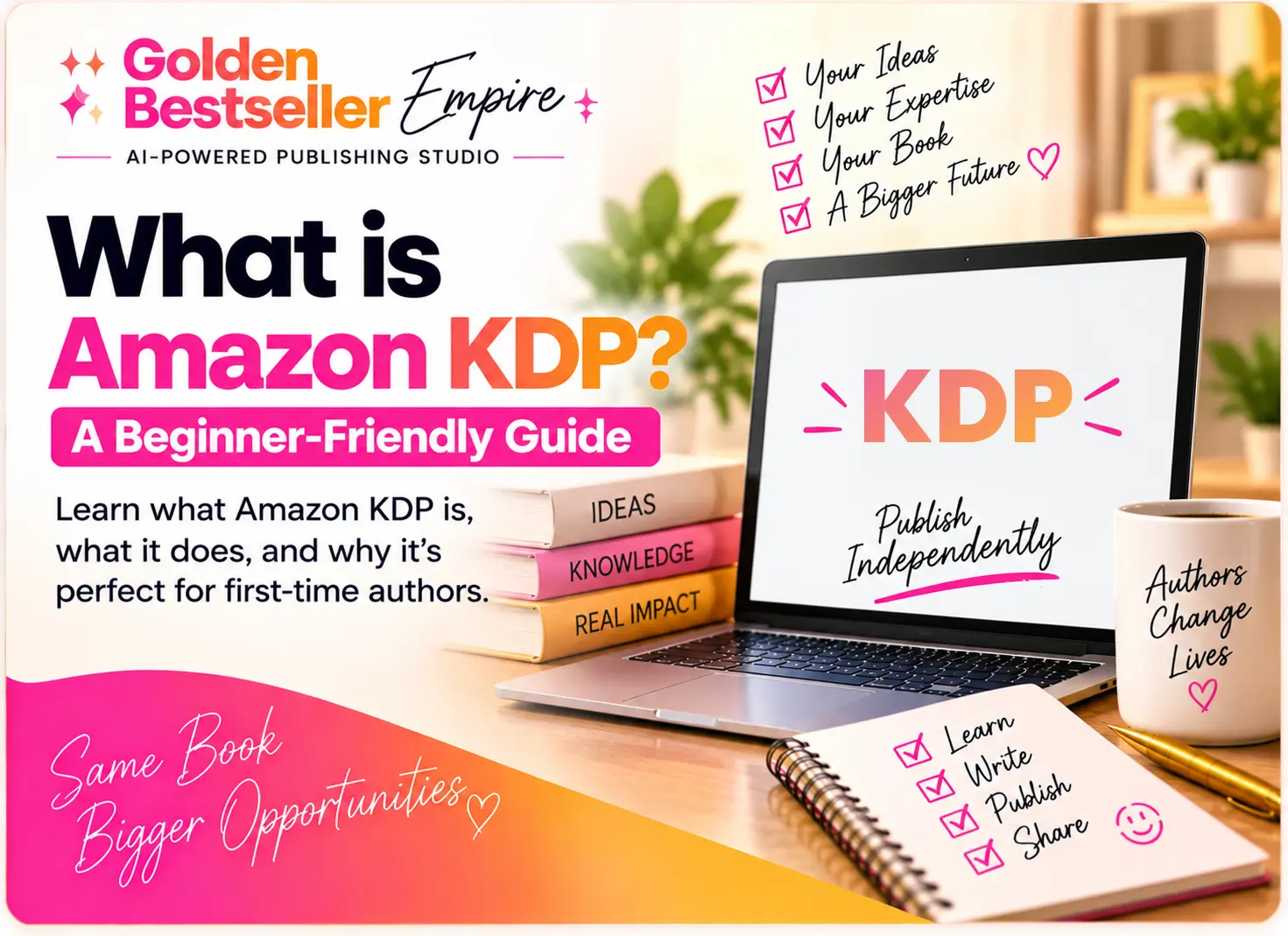
What It Is
Amazon's self-publishing platform for ebooks, paperbacks, and hardcovers
Time To Go Live
Usually within 72 hours
Royalty Options
Ebooks: 35% or 70%. Print: up to 60%

By Gundi Gabrielle
10 min read
If you've been searching "what is Amazon KDP," the short version is friendlier than you might expect.
Amazon KDP, short for Kindle Direct Publishing, is the self-publishing platform that lets any author publish a book on Amazon without a traditional publisher. You upload the book, you set the price, and Amazon handles the selling and the printing.
This explainer is part of my Amazon KDP publishing guide, where I walk through the whole process step by step.
I've published through KDP for more than ten years, so let me explain it the way I would to a friend over coffee: what it is, what it can publish, how you get paid, and the honest limits.
What is Amazon KDP, and how does it work?
Short answer: Amazon KDP is Amazon's self-publishing platform. You create an account, upload your manuscript and cover, choose your price, and Amazon lists your book on its stores around the world.
According to Amazon, your book appears on Amazon stores worldwide within 72 hours, you keep ownership of your content, and you set your own list price. There's no editor approving your idea and no agent to impress first. That's the big shift KDP created: the gatekeeper is gone, and the quality bar is yours to set.
There's a catch, and it's good to know about early: nobody does the book-making for you. You, or the team you hire, or the tools you choose, write, edit, design, and market the book. KDP is the storefront and the print shop, not your assistant.
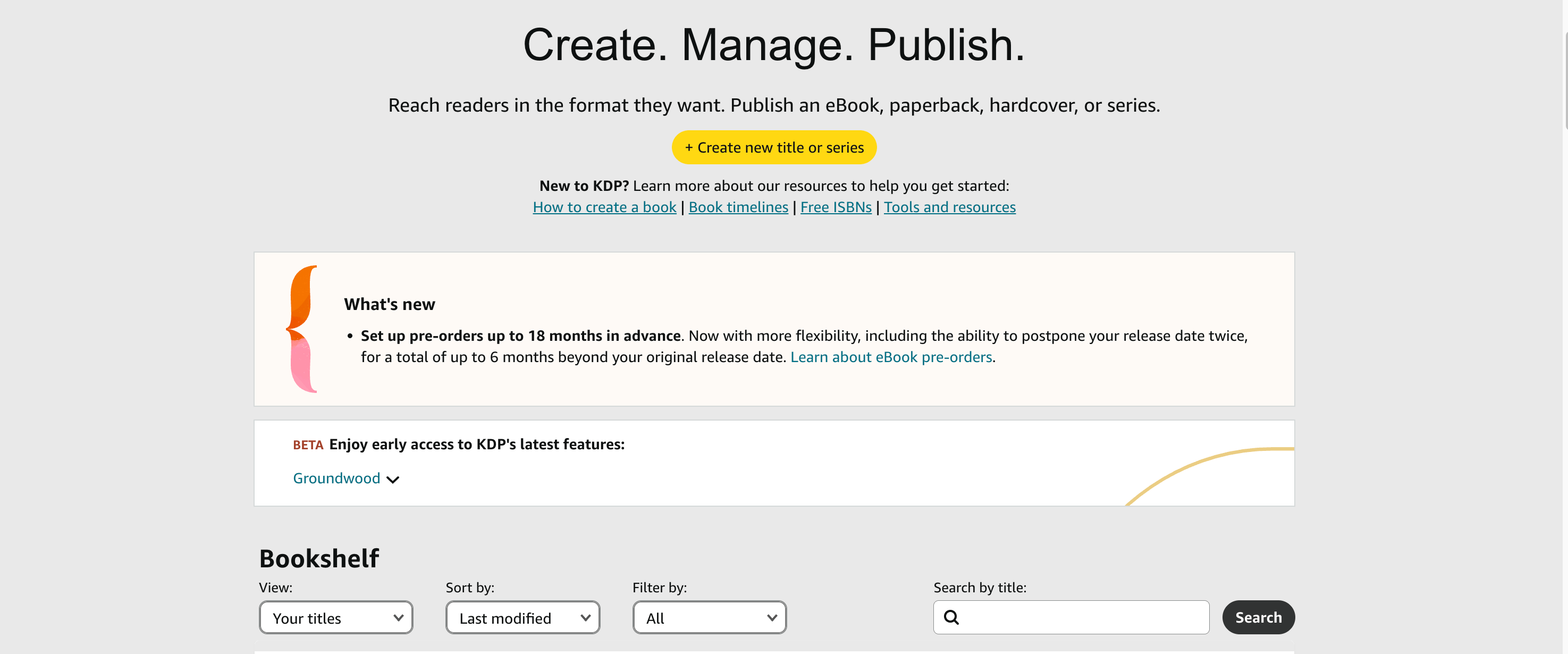
When you want the full walkthrough, my guide on how to publish on KDP takes you from account setup to your first live book.
What can you publish with Kindle Direct Publishing?
Short answer: Ebooks, paperbacks, and hardcovers. Each format has its own file and cover requirements.
- Kindle ebooks are digital books readers download to Kindle devices and the Kindle apps. They're also the only format you can set up as a pre-order.
- Paperbacks are printed on demand, which means each copy is printed when someone orders it.
- Hardcovers work the same way, printed on demand when a reader orders.
Print on demand is a big deal for authors. Nobody pays for a pallet of books up front, and nobody stores inventory. Amazon prints and ships each copy when an order comes in.
For ebooks, KDP accepts DOCX, EPUB, and KPF files. KPF is Kindle's own format, and Amazon calls it the go-to method for avoiding formatting issues across devices.
How does Amazon KDP pay authors?
Short answer: Monthly, about 60 days after the end of the month in which a sale was reported, once you reach the minimum payment threshold. The percentage you earn depends on the format.
Here's how the royalty rates work in a nutshell:
| Format | Royalty | What to know |
|---|---|---|
| Kindle ebook | 35% or 70% | You choose the option; the 70% option has a price band and delivery costs |
| Paperback | Up to 60% | Printing cost is deducted when an order ships |
| Hardcover | Up to 60% | Printing cost is deducted when an order ships |
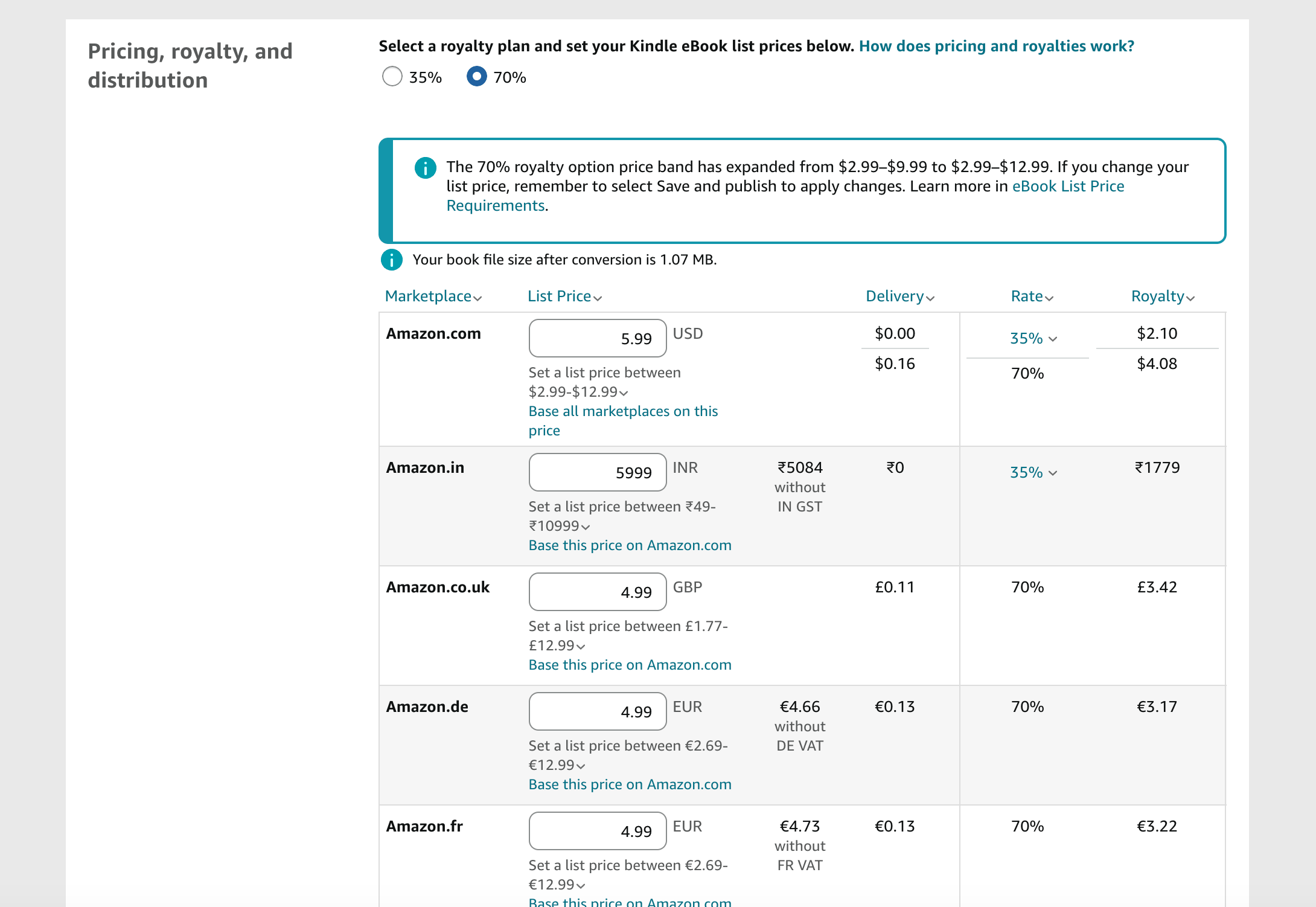
The most important recent change: the 70% royalty option on Amazon.com now covers list prices from $2.99 to $12.99. It used to stop at $9.99, and plenty of older guides still print the old number. If you've been pricing a longer nonfiction book at $9.99 just to stay under the line, it's worth a second look. I walk through the math in KDP 70% royalty.
One more thing: Amazon doesn't move your older books onto the 70% option on its own. You have to switch them yourself.
👑 Tired of doing the royalty math yourself? Golden Bestseller Empire keeps your pricing tools up to date. → See how it works
Does it cost anything to publish on Amazon KDP?
Short answer: Amazon states that Kindle Direct Publishing is free to use. It earns its share through the royalty rate, and print books also cover their printing cost out of each sale.
For print books, KDP prints on demand, so you don't pay upfront costs or carry inventory. The printing cost comes out of your royalty when an order ships. For ebooks, delivery costs apply under the 70% option and come out of your royalty.
The real costs live outside KDP: editing, a professional cover, and any marketing you choose. Those are worth budgeting for, because they're what make a book sell.
What is KDP Select, and do you have to join?
Short answer: KDP Select is an optional 90-day program for Kindle ebooks. You get extra promotion tools in exchange for selling your ebook only through Amazon while you're enrolled. You don't have to join.
While your ebook is in KDP Select, it can only be distributed through KDP and public libraries. Enrollment renews every 90 days unless you opt out. Enrolled ebooks are included in Kindle Unlimited, and Amazon pays royalties based on pages read. They also become eligible for promotion tools like Kindle Countdown Deals.
If most of your readers shop on Amazon, Select can make sense. If you want your ebook in other stores, you'd publish outside of it. Either path is valid, and you can change your mind at the end of a 90-day period.
Do you need an ISBN to publish on Amazon KDP?
Short answer: Not for a Kindle ebook. Print books need one, and you can use Amazon's free ISBN or your own.
Amazon's ISBN page says ebooks are one of the only formats where an ISBN is optional. If you use KDP's free ISBN for print, it can only be used on KDP, and your imprint, the publisher name tied to the ISBN, will show as "Independently published."
If you plan to sell your print book through other channels, or you want your own publisher name on the page, buying your own ISBN is the route to look at. If you do, the details you enter in KDP have to match what you registered with the ISBN agency, or you won't be able to publish.
Can you use AI with Amazon KDP?
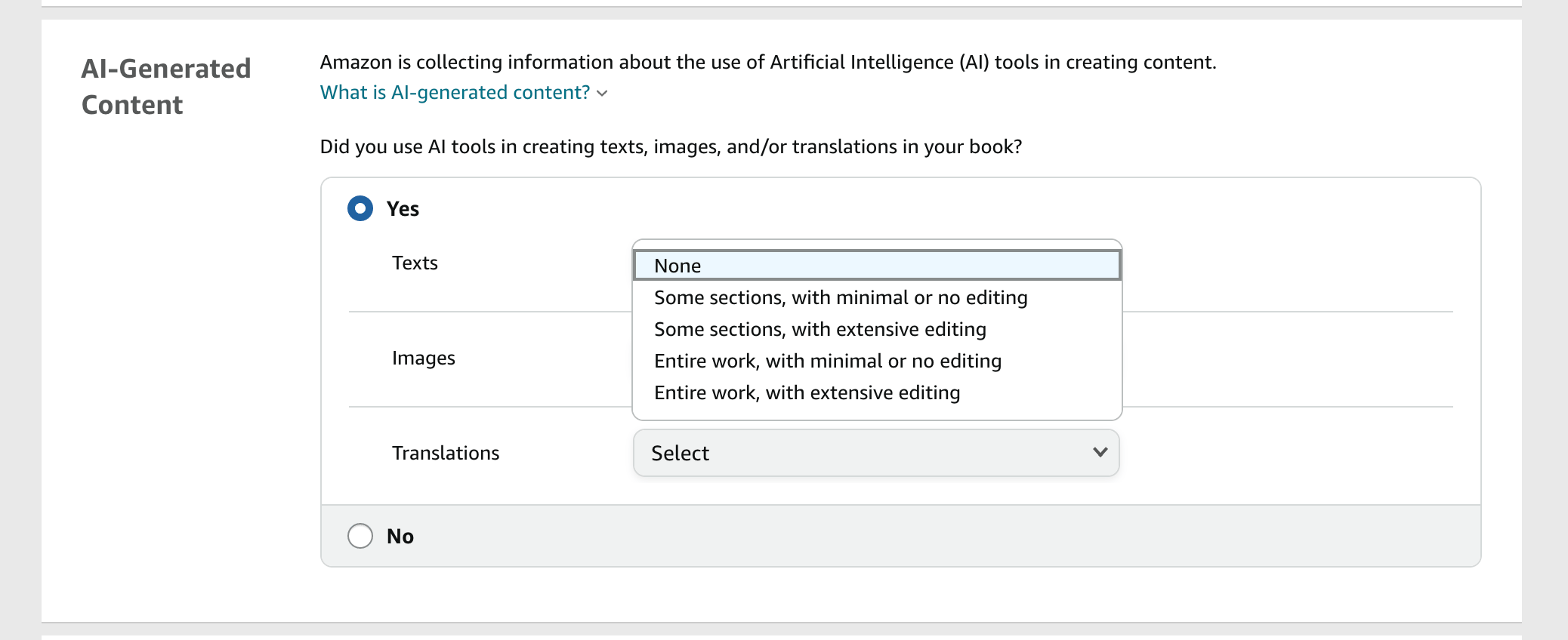
Short answer: Yes. If AI generated your text, images, or translations, you have to tell KDP. If AI only assisted you with editing or brainstorming, you don't.
KDP's Content Guidelines define the two categories clearly. AI-generated content is created by an AI tool, even if you edited it afterward. AI-assisted content is yours: you wrote it and used AI to edit, refine, error-check, or brainstorm. Only the first needs to be disclosed, and either way, you're responsible for following all content guidelines, including intellectual property rights. I explain it in full in Can You Publish AI Books on Amazon KDP?.
This is my favorite part of the new publishing world, honestly. AI book publishing, used well, helps you plan faster and polish better while the ideas and voice stay yours.
👑 Want help with the planning part? Golden Bestseller Empire helps you outline and draft your book with an AI team. → Meet your AI Publishing Team
Who uses Amazon KDP, and where does it reach readers?
Short answer: Authors and publishers of every size, from first-time writers to people with dozens of books. Amazon says KDP reaches readers in more than 10 countries and over 45 languages.
I see three groups use it most: experts and coaches turning what they know into a book, first-time authors who want to hold a real book in their hands, and experienced authors who want full control of their catalog.
Because you keep ownership and set your own list price, KDP works just as well for a single business book that supports your work as it does for a series.
How is Amazon KDP different from a traditional publisher?
Short answer: With KDP, you decide what to publish, when, and at what price. With a traditional publisher, the publisher makes those calls.
KDP puts you in the driver's seat. You keep ownership of your content, publish on your own schedule, and set your own list price. The tradeoff is that you carry the responsibility too: editing, cover design, and marketing are yours to handle or hire out.
Neither path is "better" in every case. If control and speed matter most to you, KDP is hard to beat. If you want a team of specialists behind you and are happy to give up some control, a traditional deal may suit you. Many authors, myself included, are happiest owning the process.
What are the pros and cons of Amazon KDP?
Short answer: KDP's biggest strengths are control and reach. Its biggest demands are quality and keeping up with changes.
- Pro: you keep ownership of your content and set your own list price.
- Pro: your book can appear on Amazon stores around the world within 72 hours.
- Pro: print on demand means no upfront printing costs and no inventory.
- Con: you're responsible for quality, which KDP checks for typos, formatting, and missing content.
- Con: KDP rules change, so the guide you read last year may already be out of date.
- Con: if you join KDP Select, your ebook can't be sold in other stores during the 90-day enrollment.
Is Amazon KDP right for your book?
Short answer: If you want control over your content, your price, and your timeline, yes. If you want someone else to handle editing, design, and marketing, you'll need to hire that help yourself.
Here's the honest trade:
| What KDP gives you | What stays on you |
|---|---|
| Worldwide listing on Amazon stores | Editing and proofreading |
| Print on demand with no inventory | A professional cover |
| Your content stays yours, and you set the price | Marketing and getting reviews |
| Monthly royalty payments | Keeping up with KDP rule changes |
What I'd tell a new author: in my experience, and from what many successful indie authors have found, it pays to stay exclusive to Amazon. It's by far the biggest bookstore in the world, and I've only ever sold on KDP. I explain how the exclusivity choice works for ebooks in my Amazon KDP publishing guide.
For coaches, consultants, and experts writing a nonfiction book, KDP is usually the fastest route from "I have knowledge" to "I have a real book people can buy." It's not magic, and it's not instant income, but it's a legitimate, low-cost way to put your expertise on a shelf with your name on it.
Where do you go after learning what Amazon KDP is?
If you're ready to move from learning to doing, here's the path I'd take:
- Follow the full step-by-step in how to publish on KDP.
- Check the latest Amazon KDP updates before you set your price, since the rules keep moving.
- Planning a launch? See how the new window works in KDP 18-month pre-orders.
So, what is Amazon KDP? It's your flexible, do-it-yourself publisher, and the more you understand it, the more confidently you can use it. If you'd like help planning your book with AI book publishing, Golden Bestseller Empire is there when you're ready.
Frequently Asked Questions
What does KDP stand for?
KDP stands for Kindle Direct Publishing, Amazon's self-publishing platform. It lets authors publish ebooks, paperbacks, and hardcovers on Amazon without a traditional publisher, keep ownership of their content, and set their own list price.
What is Amazon KDP used for?
Authors use Amazon KDP to publish and sell books on Amazon. You upload your manuscript and cover, choose your price and royalty option, and Amazon lists the book on its stores worldwide. Paperbacks and hardcovers are printed on demand when a reader orders.
Is Amazon KDP free to use?
Amazon states that Kindle Direct Publishing is free to use. Amazon earns its share through the royalty rate on each sale, and printing costs for paperbacks and hardcovers are deducted from your royalty when an order ships. You pay no upfront printing costs and carry no inventory.
Do I need an ISBN to use Amazon KDP?
Not for a Kindle ebook. Paperbacks and hardcovers need one, and you can use Amazon's free ISBN from KDP or your own. The free KDP ISBN can only be used on KDP, and your imprint will show as Independently published.
Can I use AI with Amazon KDP?
Yes. If AI generated your text, images, or translations, you must tell KDP when you publish. If you wrote the book and used AI only to edit, refine, error-check, or brainstorm, you don't need to disclose it. You're responsible for following all KDP content guidelines.
Sources & Citations
- Amazon Kindle Direct Publishing
- KDP: Self-publish with KDP (free to use, royalty options)
- KDP Help: eBook List Price Requirements (70% royalty price band)
- KDP Help: How to enroll in KDP Select
- KDP Help: What is an ISBN and Imprint?
- KDP Help: Content Guidelines (AI-generated vs. AI-assisted content)
- Living changelog: Amazon KDP & Related Marketplace Changes
This page is maintained independently and is not affiliated with Amazon. Always double-check the latest numbers inside your own KDP account before making pricing decisions.
Found this useful? Get more of this site in your Google.
One tap adds us as a preferred source — Google then shows you our posts more often in Search, Top Stories, and AI Overviews.
Created By

Top 100 Business Author · Carnegie Hall Conductor · Founder of Golden Bestseller Empire
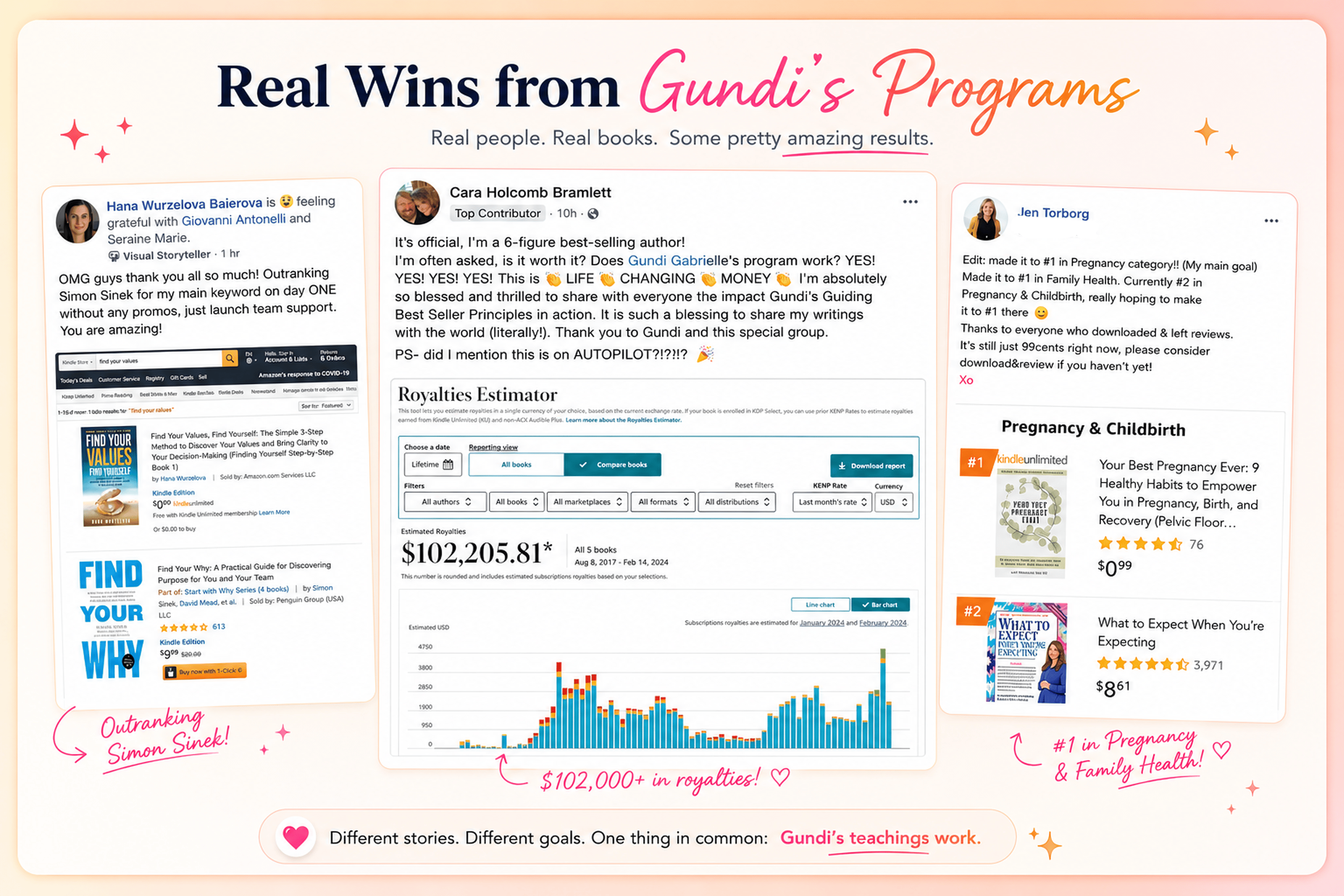
Hey, I'm Gundi, and for over a decade, I've helped thousands of everyday people turn what they know into a bestselling book.
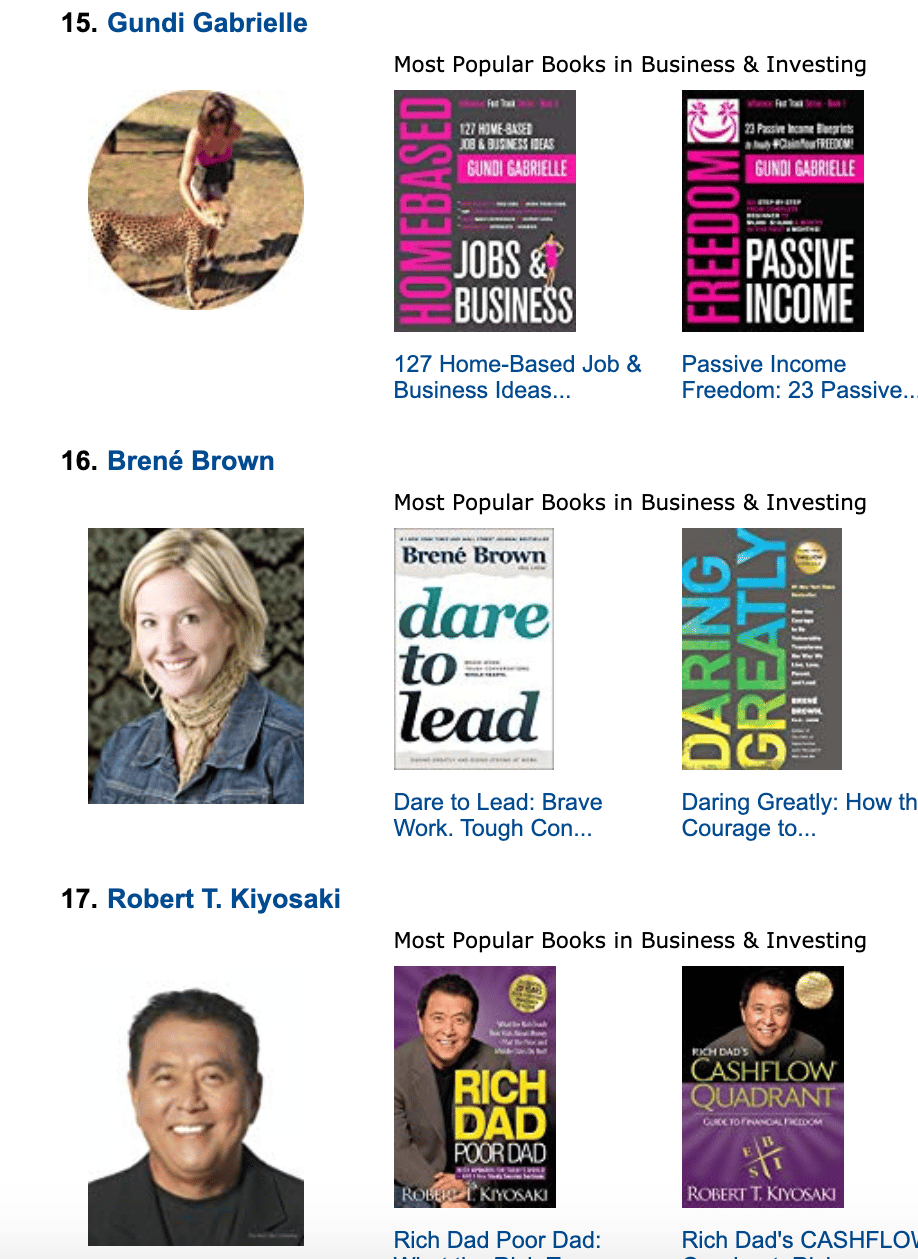
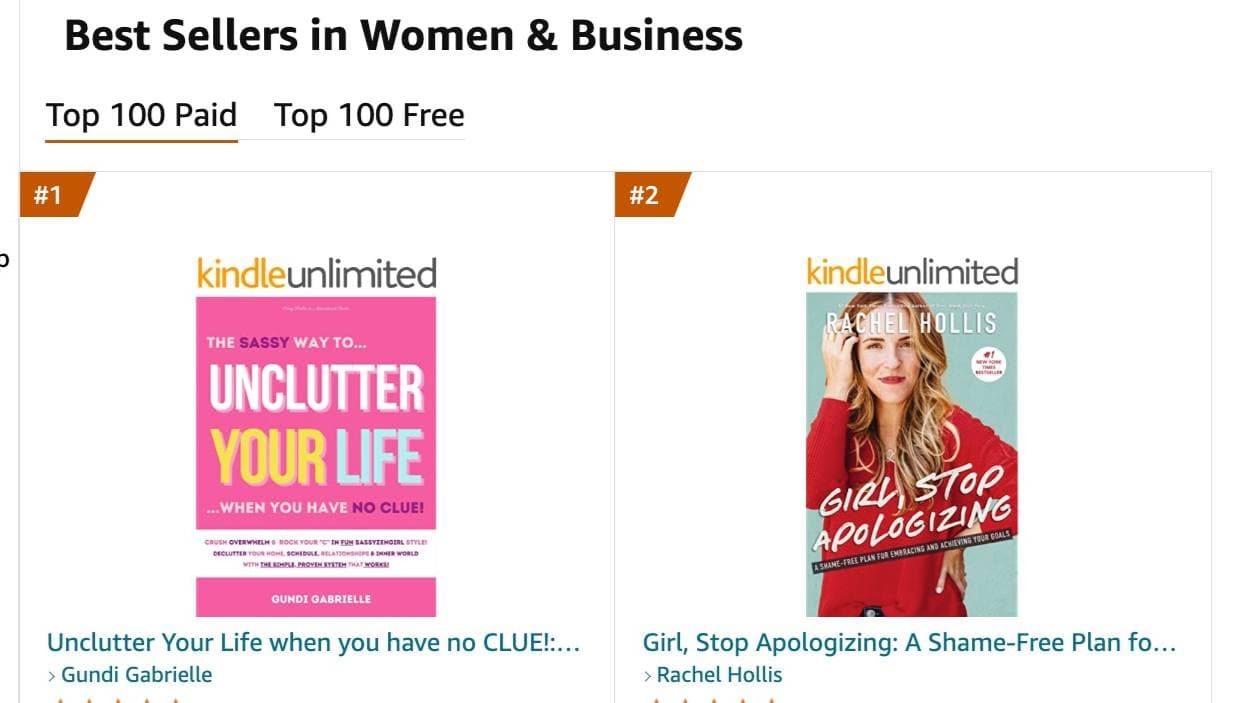
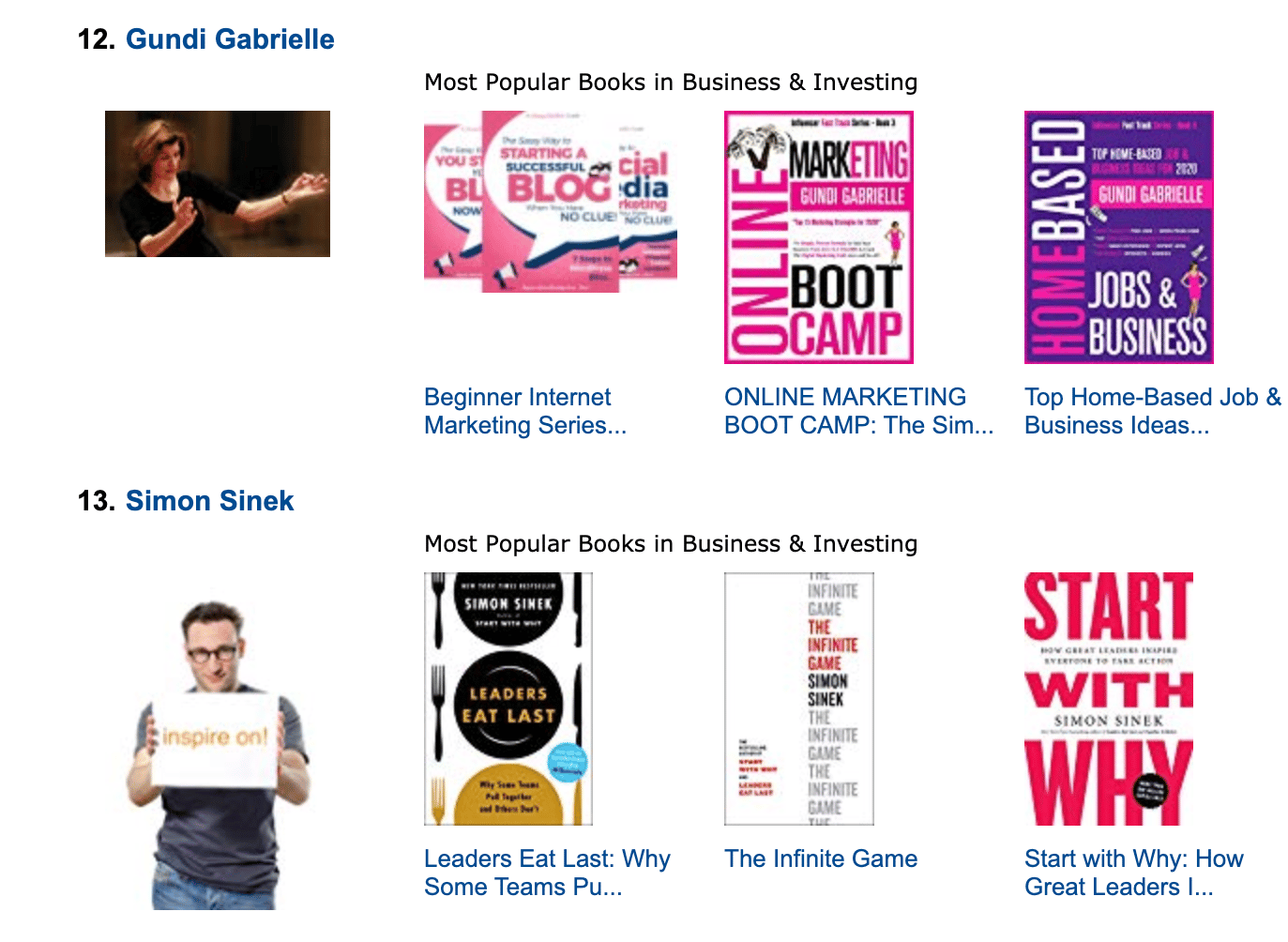
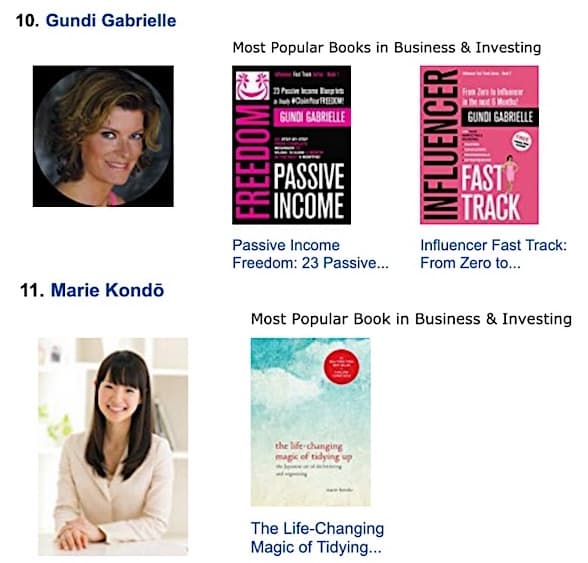
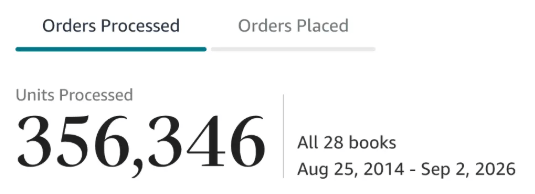
Along the way, I sold over 350,000 books, and was listed in Amazon's Top 100 Business Author Charts, ahead of authors like Simon Sinek, Brené Brown, Tim Ferriss, Robert Kiyosaki, or Brian Tracy.
No traditional publisher. No massive budget. Just understanding Amazon's algorithm and researching what readers actually want.
In my earlier years, I was a classical conductor & organist, touring the world, incl. Carnegie Hall & a performance for the Pope on St. Peter's Square.
These days, I love traveling as a Digital Nomad and orchestrating busy AI Agents 😎. Out of that came Golden Bestseller Empire — a complete AI-Powered Book Publishing Studio now helping authors around the world.
Can't wait to see you inside & help you publish your dream:
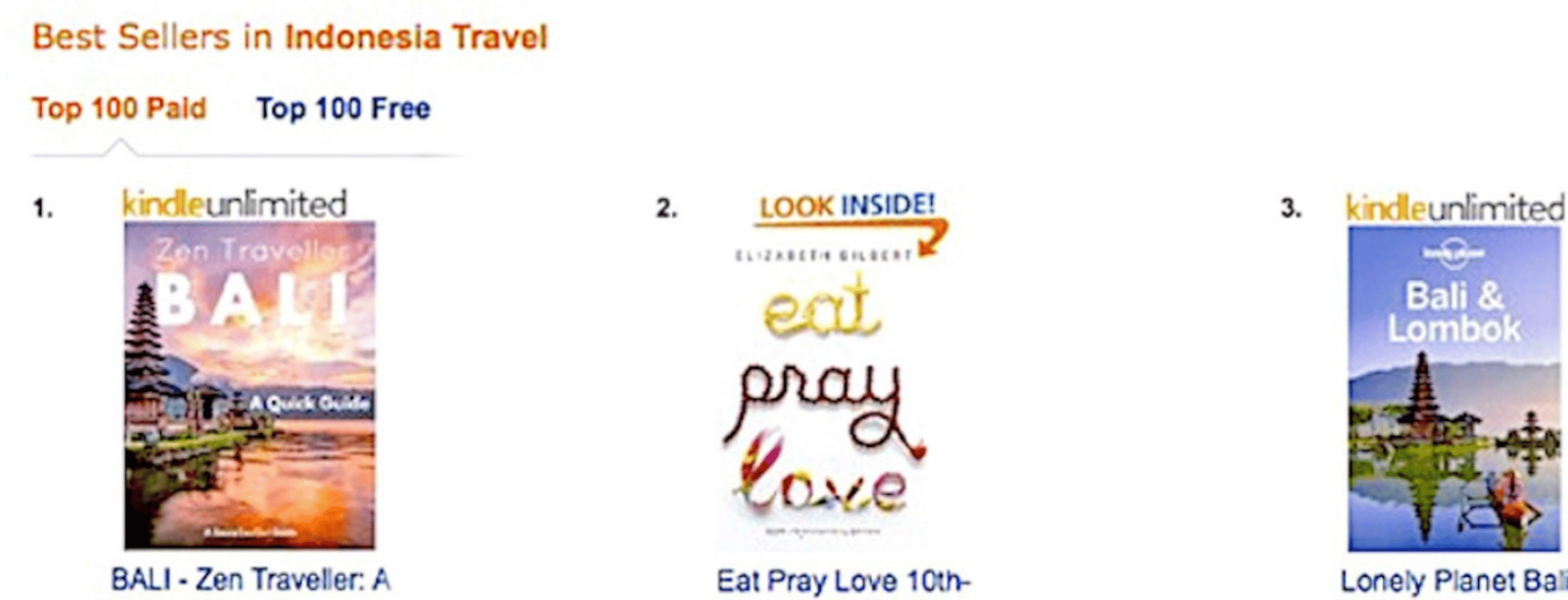
Featured In:
More from the Golden Bestseller Blog
Amazon KDP Publishing Guide
How to Publish on KDP: A Step-by-Step Guide for Beginners
How to publish on KDP with this step-by-step guide for beginners: what you need, account setup, your first ebook, print editions, series pages, and the AI rules.
Amazon KDP Publishing Guide
Amazon KDP Publishing Guide: The Complete Walkthrough for Authors
The complete Amazon KDP publishing guide in 8 steps: find your topic, plan, build, write, grow your fanbase, prep your storefront, launch, and expand.
AI Book Publishing
AI in Book Publishing: What Authors Need to Know Before They Publish
AI in book publishing is legal, allowed on Amazon KDP, and works best when AI assists and you write. Here is what the rules say and how Amazon's new algorithm fits in.
Want a faster way to plan and price your next book?
Golden Bestseller Empire's AI publishing tools help with exactly this kind of decision.