
Amazon KDP Algorithm: How It Works in 2027 (Amazon's New AI Algorithm Explained)
How the Amazon KDP algorithm works in 2027: keywords and sales, COSMO, Alexa for Shopping, and how a knowledge graph gets your book found.
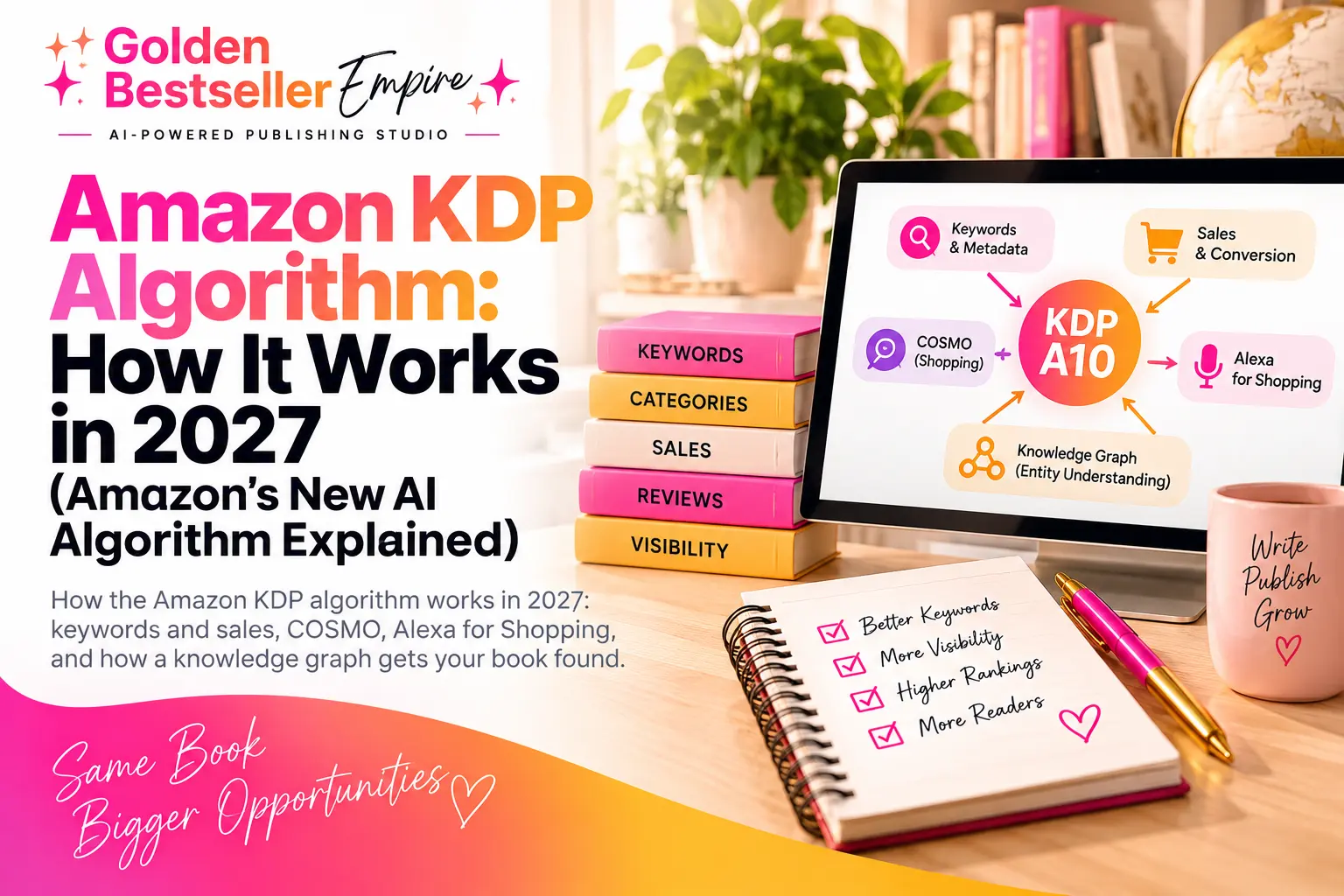
The Stack
A9 keyword gate, COSMO intent mapping, Alexa for Shopping chat
Inside Your Book
Amazon uses the actual words that match inside the book
Alexa for Shopping
Replaced Rufus on May 13, 2026
Knowledge Graph
15 COSMO relations plus Author, Series and Format = 18

By Gundi Gabrielle
14 min read
Alrighty, let's talk about the Amazon KDP algorithm... because Amazon itself now says search is "not just about matching keywords anymore," and most authors are still working as if it were.
I'm Gundi Gabrielle. I've published for over 10 years, sold more than 350,000 books, and I've been in Amazon's Top 100 Business Author charts. So I've watched the Amazon KDP algorithm change a lot. And right now it's changing faster than ever.
Ready? Let's rock it!
This is the main guide to the Amazon KDP algorithm. The other posts in this series go deeper on one piece each, and I'll point you to them as we go.
How does the Amazon KDP algorithm work?
The Amazon KDP algorithm is three systems stacked on top of each other, and most authors only work on the first one. Here's the simple version:
- A9, the keyword gate. This is the classic search engine. Your title, subtitle and description have to match the words readers type. No match, no show. Then it ranks the books that matched using sales, conversion and relevance. (You'll also hear "A10." That's just what sellers call the newer version.)
- COSMO, the intent layer. This is Amazon's "why do people buy this?" map. It's a knowledge graph, which is just a big web of ideas and how they connect. COSMO figures out what a shopper means and hands the right books to A9.
- Alexa for Shopping, the chat layer. Amazon's AI shopping assistant. It answers questions like a helpful store clerk.
One thing to get straight: COSMO is not the ranking algorithm. It decides which books are in the running. A9 decides who comes first.
👑 Want your book ready for all three? Golden Bestseller Empire builds your plan around them. → See how
What are the main ranking factors in the Amazon KDP algorithm?
Here are the signals the Amazon KDP algorithm uses to decide where your book lands in search, in order of importance:
- Conversion rate. The cleanest signal there is. Out of everyone who lands on your book page, how many buy?
- Sales velocity. How fast your book is selling, especially in the last 7 to 30 days. Steady sales beat one big spike.
- Click-through rate (CTR). Out of everyone who sees your book in the search results, how many click? Your cover, title, price and stars do that job.
- Relevance and indexing. Your book has to be indexed for the words the reader typed. No match, no show.
- Availability. If readers can't buy your book, you lose momentum fast. Most important for the paperback.
- Account and listing health. A healthy account lifts everything above. A problem account holds it down.
- External traffic. Readers you send from your email list, social media or website count more than most authors think.
- Returns and customer experience. Rising returns or unhappy readers push your visibility down.
Add bounce rate to that, too. Readers who land on your page and leave without doing anything tell Amazon your page isn't what they expected.
Readers click... they buy... your sales climb... your rank goes up... more readers see you. That's the flywheel inside the Amazon KDP algorithm. I go through every signal in my Amazon book ranking algorithm guide.
What does Amazon say about the Amazon KDP algorithm and my book?
Amazon names past sales history, availability, how long the book has been listed, and popularity. KDP's Search Results page says results are influenced by factors "including but not limited to" those four, and that nobody can guarantee your book lands near the top.
Keywords matter too. KDP's keyword page says "relevant keywords can boost your placement in search results" along with sales history and Best Sellers Rank. Your main keywords, the ones in your title, subtitle and description, do the heavy lifting. The seven keyword boxes in KDP are a smaller, supporting help.
Quick reality check on the common myths: a flood of sales does not rescue a book whose title, subtitle and description don't match the search. And reviews don't either. They help once you're in the pool. That's why the keyword gate comes first. I go through these in the Amazon book ranking algorithm guide and the Amazon A10 algorithm guide.
Does Amazon read the inside of my book?
Yes, and Amazon has confirmed it. Your manuscript is read, and it matters for where your book shows up.
Here's the proof, straight from KDP's Read Sample page: "When customers search for books on Amazon.com, we use the actual words that match inside the book to return the best possible selection of books."
Read that again... the Amazon KDP algorithm doesn't only look at your title and description. It reads your book, and it uses those words to decide which books to show.
So your introduction, table of contents, chapter titles and subheaders are not decoration. They're searchable text. Readers can preview about the first 10% of your book, and that's the part that counts the most. Most authors rush it. Don't.
How did AI change the Amazon KDP algorithm?
The Amazon KDP algorithm now leans on understanding what shoppers want, not just matching words. In Amazon's own words: "It's not just about matching keywords anymore—it's understanding what customers are actually looking to buy."
Then on May 13, 2026, Rufus became Alexa for Shopping. Amazon's announcement says it draws on the product catalog, customer reviews, community Q&As and information from across the web. And it doesn't stop there. Alexa already reads your reading and listening activity too, across Kindle and Audible, so it knows what each reader likes.
You find it in the Amazon app menu. It's a separate chat, not the search bar. The search bar is still the classic keyword engine.
What does Alexa for Shopping read about your book? Your listing copy, your reviews, the Q&A, and the beginning of your book. So a listing that talks like your reader, in plain words about their real day, gets mentioned. A listing full of vague hype doesn't. More in Alexa for Shopping and your book.
👑 Want a listing that answers questions? Golden Bestseller Empire writes it from your book plan. → See the listing tools
What is COSMO, and what does it do for books?
COSMO is Amazon's knowledge graph of why people buy things. It was published in a research paper at the SIGMOD conference in June 2024. The graph has 6.3 million nodes (the "things" in the web), 29 million edges (the links between them) and 15 relation types, across 18 product categories.
It learns from what people search and then buy, and from what gets bought together. Amazon says it's deployed in search, for things like search navigation. In a test on about 10% of U.S. traffic it lifted product sales by 0.7%, relative.
Think of each relation as a question Amazon asks about a product. Who is it for? What is it used for? When? Where? What does the reader want? A relation is just one of those questions.
The paper has 15. For books I map 3 more: Author, Series and Format. That's 18. Here's the Coverage Map from my Knowledge Graph Generator, filled with sample phrases:
Want the full tour? Head to the COSMO algorithm guide and the COSMO relations guide.
How is a knowledge graph different from keyword research?
Keyword research hunts for high-volume words. A knowledge graph maps everything your book is about, once, and files each phrase under the question it answers.
When Amazon sees "mom guilt," "evening burnout" and "mental load" in your listing, it's not just matching words. It recognizes ideas it already has in its web and confirms your book belongs there. Same words. Different job.
I teach it in three layers, and they're simple:
- Concept node: the idea itself, like mom guilt.
- LSI term: how that idea shows up in your writing, like "guilt spiral."
- Intent string: how a reader types it, like "why do I feel so guilty after work?"
Same idea, three ways to say it. The graph still contains keyword-style phrases. It just adds structure, so you can see at a glance which questions your listing doesn't answer yet. I compare the two in knowledge graph vs keywords.
What is a knowledge graph for a book?
A knowledge graph for a book is those 18 relations, each filled with phrases in your reader's own words. Every phrase has to pass three tests: it sounds like your reader, it could be typed into Amazon or asked out loud, and it answers the right relation.
Golden Bestseller Empire builds it from your Book Planner blueprint, starting with one Core Entity (more on that next). Here's a real output for a sample book:
Six groups: Audience, Classification, Functional, Context, Interest and Desire, and Book Specific. And here's the same graph as a visual map:
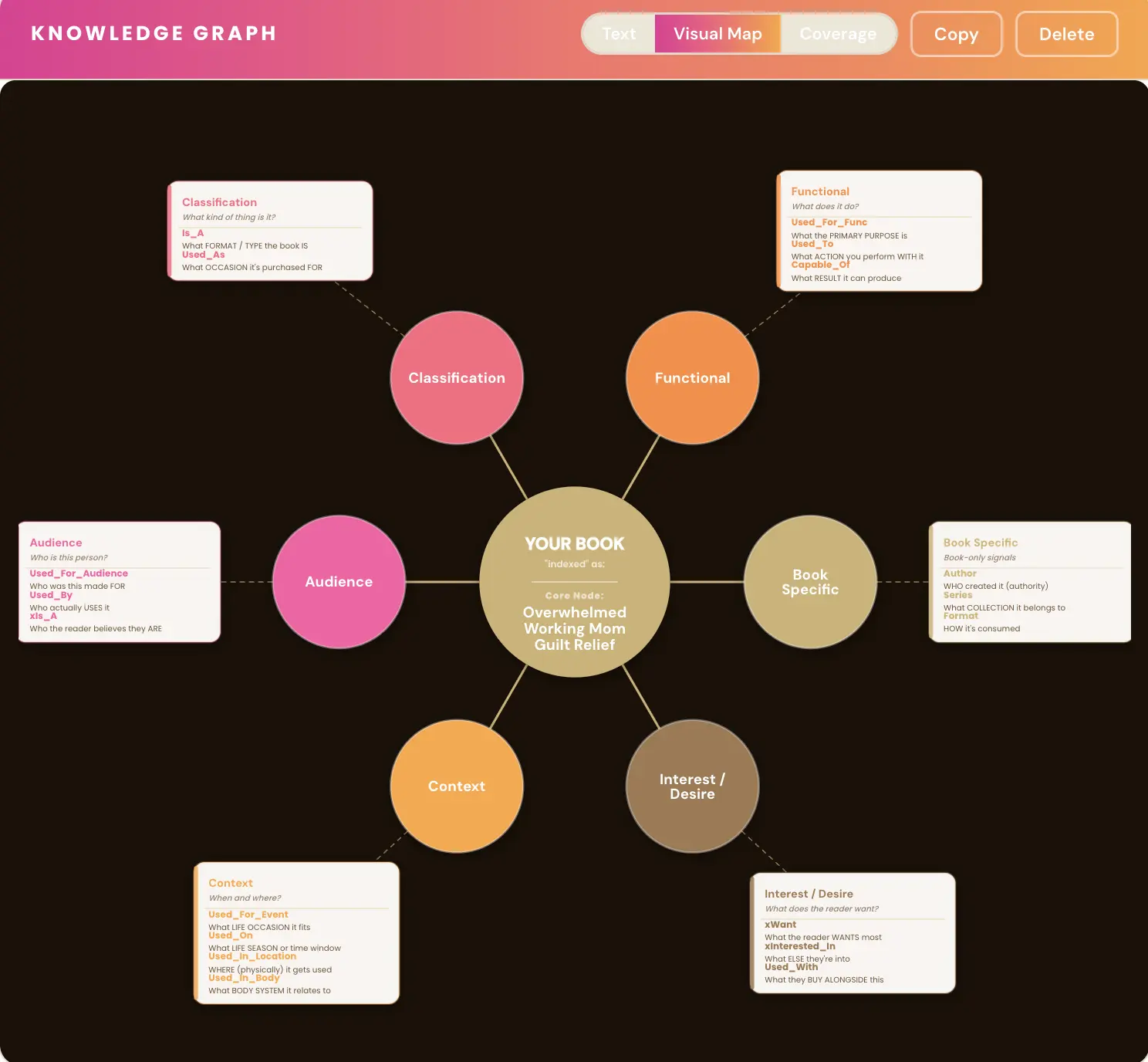
New to the idea? Start with what a knowledge graph is.
👑 Want a graph like this for your book? Golden Bestseller Empire builds it from your answers. → See the graph
What is a Core Entity, and how do I choose one?
A Core Entity is a three-to-five word phrase that says who your book is for, what gap they have, and what changes for them. Here's the formula:
Reader + Primary Gap → Transformation = Core Entity
Here it is with a real example:
Working Mom + Guilt → Reset = "Working Mom Guilt Reset"
Three pieces. One short phrase. That's it. And it's the phrase the Amazon KDP algorithm can pin your book to.
It is not your title. It's the one idea your book is the authority on. A title would be "How I Stopped Feeling Guilty at 6pm."
The last word has to actually fix the gap. Guilt ends in relief or freedom. Exhaustion ends in reset or renewal. Anxiety ends in calm. (Calm doesn't fix guilt. I see that mistake a lot.)
One book, one main Core Entity. If your book tries to own three ideas equally, Amazon can't tell what it is. That's also why series work so well: each book owns its own idea, and the books share the same audience.
Why does one precise phrase beat several vague ones?
Because COSMO rewards the typical reason people buy, not every possible reason. The paper rates its ideas two ways: plausible (could be true) and typical (the common reason). For search-and-buy pairs, about 35% were typical. For things bought together, only 9%.
So ask one question about every phrase: is this what most buyers in my niche want? If it's a rare edge case, cut it, even if it's true.
"How to stop snapping at my kids after work" is typical for a working mom burnout book. A phrase about cortisol science might be true, but it's not why most people click Buy.
Where does the knowledge graph go in my listing?
It goes on every surface the Amazon KDP algorithm reads. Each one carries a different piece of the graph.
- Title and subtitle. These carry your main keywords. Audience, gap and transformation in the fewest words. KDP says title and subtitle together must be fewer than 200 characters. Aim for one or two clear ideas. Stuffed titles scare off real readers.
- Description. Your main keywords again, with all six groups woven into a short pitch. KDP calls it "a 30-second elevator pitch" and bans reviews, keyword lists and time-sensitive info. See the KDP metadata guidelines.
- A+ content. Audience, function and desire, shown visually.
- Inside the book. The introduction, table of contents and subheaders. Amazon shows about the first 10% as a preview, so that's where the signal lives. The introduction does more of this work than all the chapters combined.
- The seven backend keywords. A smaller supporting help. Up to seven phrases of two or three words, the way a reader would type them, built from your intent strings.
When everything comes from one graph, everything matches. That's the whole idea behind working with the Amazon KDP algorithm instead of against it.
👑 Want every surface built from one graph? Golden Bestseller Empire does it with a click. → Start with the Book Planner
How do I check my book against the Amazon KDP algorithm?
Run this quick checklist before you hit publish, and again every few months. It takes about twenty minutes:
- Core Entity: Can you say it in three to five words? Is it in your title or subtitle?
- Title, subtitle and description: Do they use the words your reader would actually type?
- Description: Does it read like a 30-second pitch, with no review quotes or keyword lists?
- Introduction: Does it say who the book is for and what changes for them, in your reader's own words?
- Categories: KDP lets you pick 3 per format. Kindle and print are separate, so you get 6 spots in total.
- Availability: Is every format you sell actually live and in stock?
If you can tick all six, you're already ahead of most books in the Amazon KDP algorithm. Pick one and fix it today.
How long does a new book get a boost in the Amazon KDP algorithm?
A new release gets a boost for months, not the "3 weeks" you'll hear on forums. I saw a book that launched in January 2026 rank #2 for a broad burnout search in May 2026. That's four months later. :)
During that window, a good keyword match plus the new release boost can beat older, bigger books. So your launch matters. A tidy listing, early readers and a few steady sales in the first weeks all pile up. Get the listing right before launch day, because that's when the Amazon KDP algorithm is paying the closest attention.
How does Golden Bestseller Empire optimize for the Amazon KDP algorithm?
It turns your Book Planner blueprint into algorithm-ready outlines and a knowledge graph, so your book fits the Amazon KDP algorithm from page one. Then it builds the rest of your listing from that graph. The planner asks why your book is different, who the reader is, their biggest concern and gap, their objections, and the outcome they want.
From that come your outline, book description, A+ content, backend keywords, translations and Amazon ads keywords. I don't know of another app that does this.
It's AI-assisted, not AI-written. You write the book, or dictate it. The app helps with the planning and the publishing work, and the course walks you through the whole process.
I used it to write and publish AI for Beginners from my Blissful Kittens Explain series. It was faster and easier, and it hit #1 within 3 days.
What mistakes do authors make with the Amazon KDP algorithm?
The biggest mistake is working on one layer and ignoring the other two. Here are the ones I see most:
- Stuffing the title with keywords. Readers see it and walk away, and your conversion drops.
- Rushing the introduction. Amazon reads it, and so do your readers.
- Chasing a sales spike. Steady sales beat one big day.
- Owning three ideas at once. One book, one main Core Entity.
- Keeping rare phrases because they're true. If most buyers don't want it, cut it.
- Treating the seven backend keywords like the whole game. Your title, subtitle and description matter more.
Fix these six and the Amazon KDP algorithm has a lot less to work around. Easy to say... but it gets simple once your plan is on paper.
Related reading
- Amazon A10 algorithm: what really changed
- The Amazon COSMO algorithm for books
- Is your book page ready for AI shopping?
- KDP Keywords: Rules and Limits
- KDP Metadata Guidelines
- Amazon KDP publishing guidelines: every rule in one place
What should I watch for next with the Amazon KDP algorithm?
Keep an eye on Alexa for Shopping, because it's the newest part of the Amazon KDP algorithm story. It already reads Kindle and Audible activity, and it keeps getting smarter. I post every change in the latest Amazon KDP updates.
And here's the short version of everything above. In the Amazon KDP algorithm, the keyword gate still decides who gets seen. Amazon now also reads meaning. So build your book's knowledge graph first, a Core Entity plus the 18 relations in your reader's own words, and use it for your title, keywords, description, A+ content and the book itself.
Isn't that a lot easier than guessing your way through the Amazon KDP algorithm? :)
Frequently Asked Questions
How does the Amazon KDP algorithm work?
The Amazon KDP algorithm is three systems stacked together: A9 matches and ranks books by keywords, sales and relevance, COSMO maps what shoppers mean to the right books, and Alexa for Shopping answers questions in a chat. COSMO picks the candidates and A9 decides who comes first. COSMO is the intent layer, not the ranking algorithm.
What does Amazon say affects where my book ranks?
KDP's Search Results page names past sales history, availability, how long the book has been listed, and popularity, "including but not limited to" those. KDP also says relevant keywords can boost your placement, and nobody can guarantee a top spot.
Does Amazon read the words inside my book?
Yes. KDP says, "When customers search for books on Amazon.com, we use the actual words that match inside the book." That makes your introduction, table of contents and subheaders searchable text, so write them with your reader's words.
What is a knowledge graph for a book?
A knowledge graph for a book is 18 relations, the 15 from Amazon's COSMO paper plus Author, Series and Format, each filled with phrases in your reader's own words. It starts from your Core Entity and covers audience, classification, function, context, interest and desire, and the book itself.
How do I optimize for the Amazon KDP algorithm?
Build your knowledge graph first, then use it everywhere: your title, subtitle and description, your A+ content, the introduction and subheaders inside the book, and up to seven backend keywords as a smaller help. When every surface says the same thing, the Amazon KDP algorithm knows exactly what your book is.
Does Golden Bestseller Empire write my book with AI?
No. You write the book, or dictate it. Golden Bestseller Empire is AI-assisted: it turns your Book Planner blueprint into algorithm-ready outlines and a knowledge graph, and builds your description, A+ content, backend keywords, translations and Amazon ads keywords from it.
Sources & Citations
- KDP Help: Search Results
- KDP Help: Make Your Book More Discoverable with Keywords
- KDP Help: Read Sample (Look Inside the Book)
- KDP Help: Metadata Guidelines for Books
- Amazon: How Amazon is using generative and agentic AI to transform shopping
- Amazon: Rufus is now Alexa for Shopping (announcement)
- COSMO: A Large-Scale E-commerce Common Sense Knowledge Generation and Serving System at Amazon (SIGMOD-Companion 2024)
- Living changelog: Amazon KDP & Related Marketplace Changes
This page is maintained independently and is not affiliated with Amazon. Always double-check the latest numbers inside your own KDP account before making pricing decisions.
Found this useful? Get more of this site in your Google.
One tap adds us as a preferred source — Google then shows you our posts more often in Search, Top Stories, and AI Overviews.
Created By

Top 100 Business Author · Carnegie Hall Conductor · Founder of Golden Bestseller Empire
Hey, I'm Gundi, and for over a decade, I've helped thousands of everyday people turn what they know into a bestselling book.
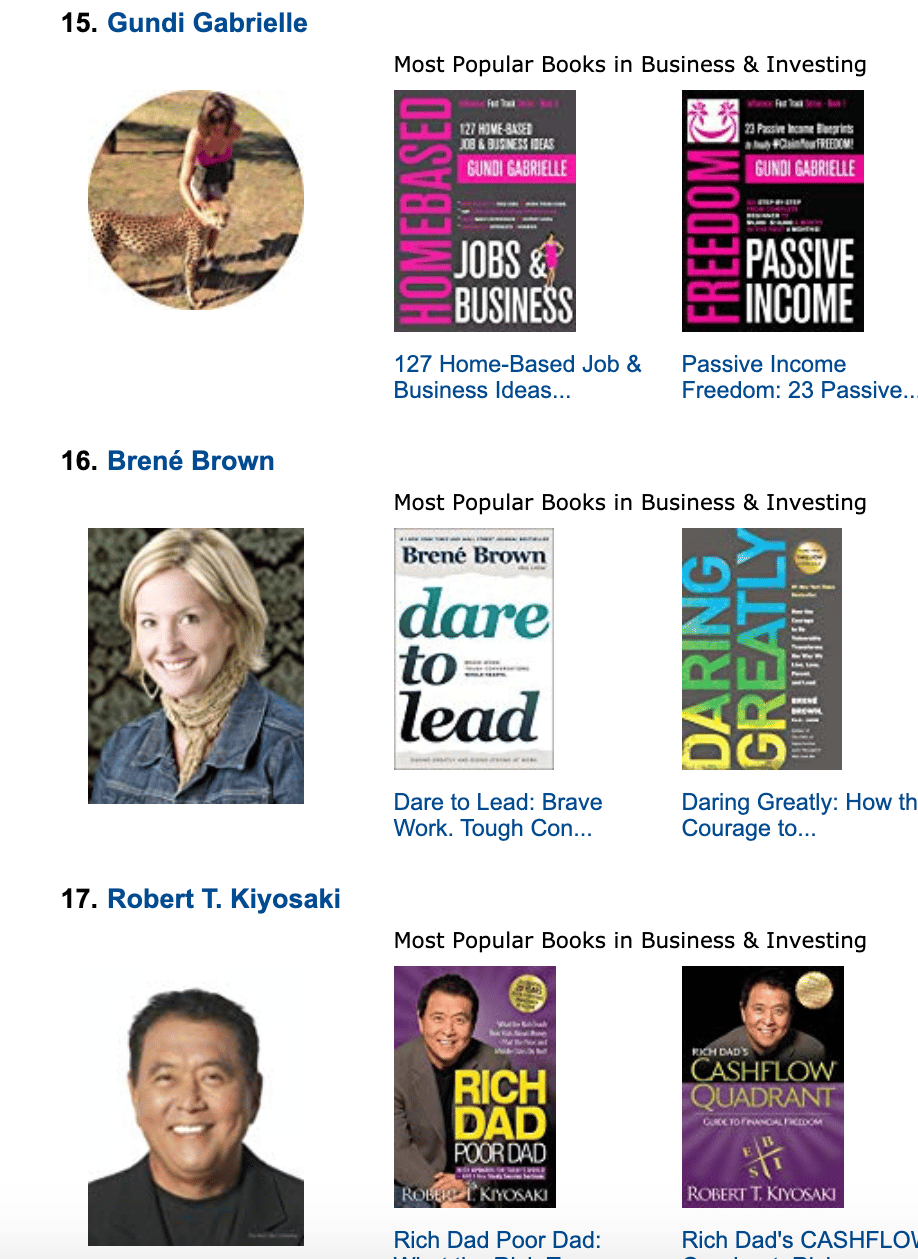
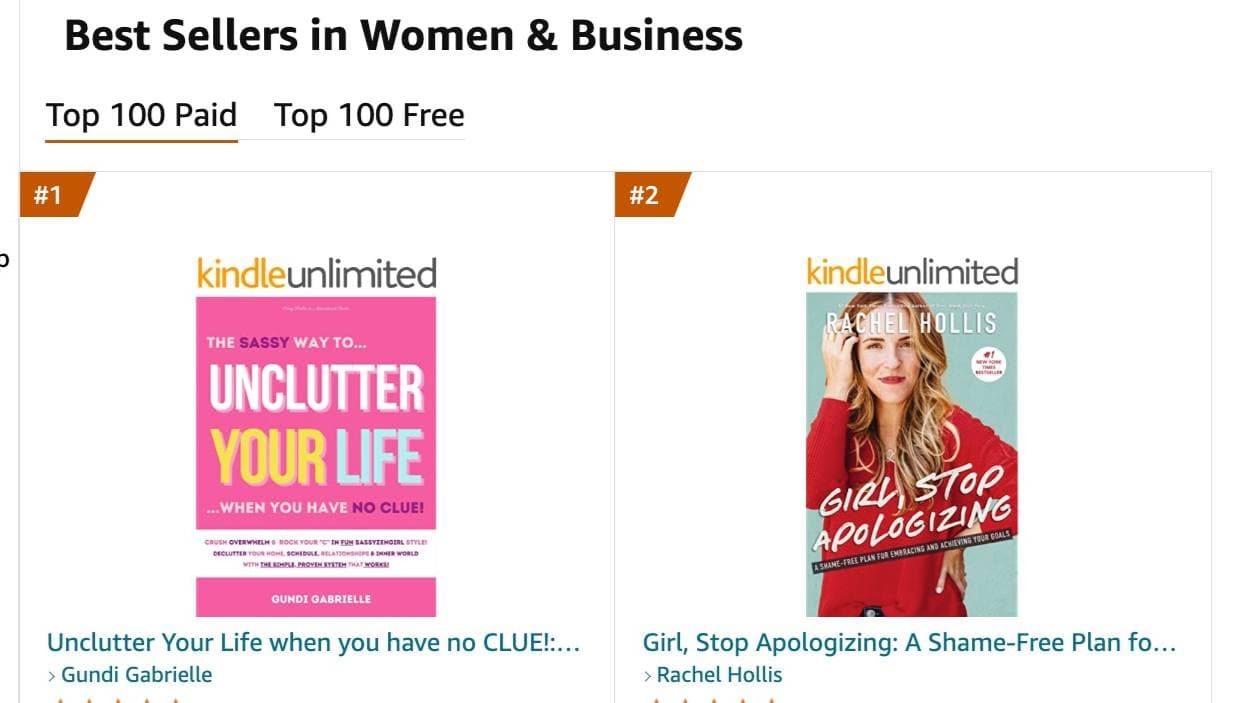
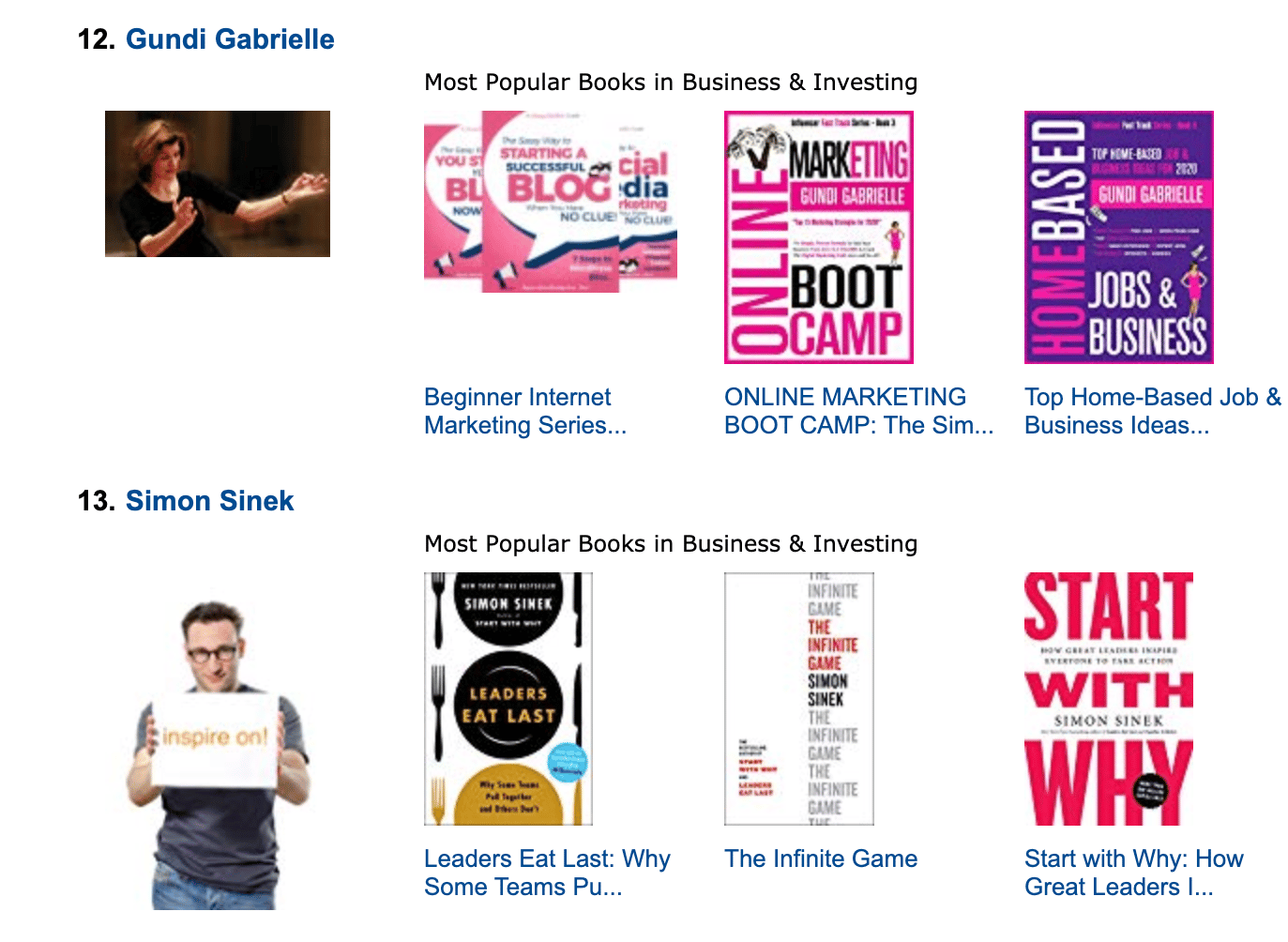
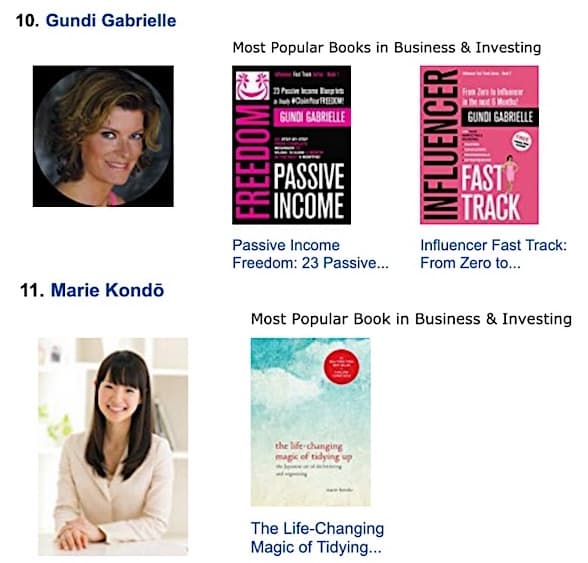
Along the way, I sold over 350,000 books, and was listed in Amazon's Top 100 Business Author Charts, ahead of authors like Simon Sinek, Brené Brown, Tim Ferriss, Robert Kiyosaki, or Brian Tracy.
No traditional publisher. No massive budget. Just understanding Amazon's algorithm and researching what readers actually want.
In my earlier years, I was a classical conductor & organist, touring the world, incl. Carnegie Hall & a performance for the Pope on St. Peter's Square.
These days, I love traveling as a Digital Nomad and orchestrating busy AI Agents 😎. Out of that came Golden Bestseller Empire — a complete AI-Powered Book Publishing Studio now helping authors around the world.
Can't wait to see you inside & help you publish your dream:
Featured In:
More on the Amazon Book Algorithm
Amazon Algorithm
Amazon COSMO Algorithm: What It Is and How Authors Can Use It
The Amazon COSMO algorithm maps why people buy. Here is what it is, what Amazon's own paper shows, and how to use it for your book, in plain English.
Amazon Algorithm
Alexa for Shopping for Authors: What Changed and What to Do
Alexa for Shopping replaced Rufus on May 13, 2026. Here is how it works for books and exactly what to put in your listing so readers get pointed to you.
Amazon Algorithm
Amazon A10 Algorithm for Authors: How It Ranks Your Book
The Amazon A10 algorithm decides which book shows up first. Here is how it works, where COSMO fits in, and what to do about it.
Amazon Algorithm
Amazon Book Ranking Algorithm: What Really Moves Your Book Up
The Amazon book ranking algorithm in plain English: what KDP says counts, what Best Sellers Rank really measures, and what you can do about it.
Amazon Algorithm
Knowledge Graph vs Keywords: Why Keywords Alone Aren't Enough on Amazon Anymore
Knowledge graph vs keywords on Amazon, in plain English: what each one does, why Amazon says search is not just matching keywords anymore, and how to use both. The seven backend keywords are only a small help.
Amazon Algorithm
What Is a Knowledge Graph for a Book? A Plain-English Guide for Authors
A knowledge graph for a book is a simple map of who it's for, what it does and when it's used. Here's what it is, why Amazon cares, and how to build yours.
Amazon Algorithm
COSMO and Alexa for Shopping: How They Work Together
COSMO figures out what a shopper means. Alexa for Shopping talks to them about it. Here is how COSMO and Alexa for Shopping fit together, in plain English, and what to do as an author.
Amazon Algorithm
COSMO Relations for Books: All 15 Explained (Plus the 3 Extra Ones for Authors)
The 15 COSMO relations from Amazon's paper explain why people buy. Here is each one in plain words, with the paper's example and what it looks like for a book.
Amazon Book Pages
Is Your Amazon Book Page Ready for AI Shopping?
Amazon's shopping assistant now answers questions and compares products in the search bar. Here's what that means for your Amazon book page, and what to check.
Amazon Algorithm
AI-Generated Books and the Amazon Algorithm: Why Specific Beats Generic
AI-generated books can rank on Amazon but rarely sell. Here is what KDP makes you disclose, why generic books lose, and the AI-assisted way to publish.
Want a faster way to plan and price your next book?
Golden Bestseller Empire's AI publishing tools help with exactly this kind of decision.